Tissot: A Complete Brand History and Buying Guide




The Origins of Tissot
Charles-Félicien Tissot and his son Charles-Émile Tissot founded the brand in Le Locle, Switzerland, in 1853. Le Locle sits in the Jura mountains of the Neuchâtel canton, a region that had been synonymous with precision watchmaking for well over a century before the Tissots set up their workshop. It was not an auspicious moment in global history for luxury goods, but Swiss watchmaking was already earning a formidable reputation, and the Tissots were determined to be part of it.
Charles-Émile Tissot took the business to America in the 1860s, becoming one of the first Swiss watchmakers to actively target the US market. That instinct for commercial ambition would define Tissot for generations. By 1907, Tissot had merged with Omega to form the Société Suisse pour l'Industrie Horlogère, better known as SSIH. This association gave Tissot access to greater manufacturing resources and kept it at the forefront of Swiss watchmaking through much of the twentieth century.
Innovation Through the Decades
Tissot has never been content to simply make good watches. The brand has consistently pushed boundaries, often ahead of far more expensive Swiss names.
In 1930, Tissot produced the world's first anti-magnetic watch. In 1971, they launched the first plastic watch, the Tissot Idea 2001, a full decade before plastic watches became fashionable. Then came the Tissot Rock Watch in 1985, a watch with a dial carved from genuine granite. It sounds like a marketing stunt. It was also genuinely impressive engineering.
The brand joined the Swatch Group in 1983, following the merger that created the modern Swiss watch conglomerate. This gave Tissot a level of industrial backing that allowed it to compete at scale, while retaining its identity as a Swiss Made, mid-range specialist. Today, Tissot sits comfortably in that position: better than fashion watches, well below the stratospheric pricing of Rolex or Patek Philippe, and enormously popular for precisely that reason.
Perhaps the most significant modern innovation was the T-Touch range, launched in 1999. The T-Touch watches use a sapphire crystal with touch-sensitive technology to activate multiple functions including a compass, altimeter, thermometer, and weather forecast. It was a remarkable achievement for an analogue watchmaker, and the technology has continued to evolve. The current Tissot T-Touch Connect Sport takes that heritage into the connected watch era.
The Powermatic 80 Movement
One of the most talked-about developments in modern Tissot history is the Powermatic 80 movement, introduced in 2012. The calibre offers an 80-hour power reserve, roughly twice what you get from a standard automatic movement. It runs at 3Hz (21,600 vph), which aids longevity, and it is regulated to COSC-adjacent accuracy standards straight from the factory.
The Powermatic 80 transformed Tissot's automatic range. Watches that previously required winding every day or two now comfortably last a full weekend unworn. For anyone who rotates between several watches, this matters enormously. You can take the watch off on Friday evening and put it back on Monday morning, and it will still be running.
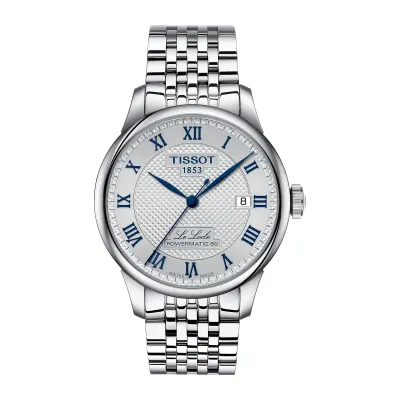
This movement now powers some of Tissot's most popular collections, including the Tissot PRX Powermatic 80, the Tissot Le Locle Powermatic 80, and the Tissot Gentleman automatic range. All offer genuine Swiss automatic watchmaking from around £640 upwards.
Tissot and Motorsport
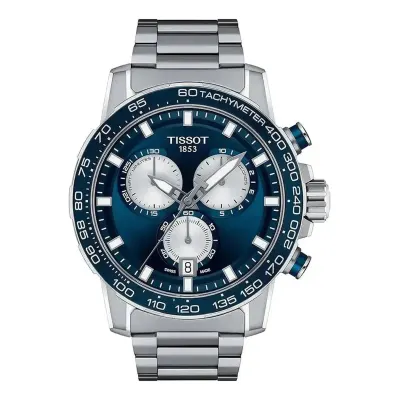
Tissot has been the official timekeeper of MotoGP since 2001, and the brand's association with motorsport runs far deeper than mere sponsorship. The T-Race collection was born from that partnership, producing bold, sport-focused chronographs that carry genuine race-inspired design language. The limited edition MotoGP watches are genuine collector's pieces, with the T-Race MotoGP 2026 Limited Edition available from £630.
Tissot is also the official timekeeper of the Tour de France cycling race, the NBA, the FIBA Basketball World Cup, and several other major sporting events. The brand's sporting credentials are not manufactured. They are built into the DNA of what Tissot produces.
The Collections Explained
With 499 watches on WatchShopper, navigating the Tissot range can feel like a considerable task. Here is how the collections break down.
Everyday Elegance: Everytime and Dream
The Tissot Everytime is exactly what the name suggests. Simple, clean, quartz-powered dress watches starting from £195. The 40mm men's version is one of the best entry-level Swiss watches you can buy at that price. The dial is uncluttered, the case finishing is neat, and it wears well with everything from a suit to a weekend shirt. Good value. Full stop.
The Dream collection sits at a similar price point, with slightly more decorative case designs. Both collections offer a gentle introduction to Swiss watchmaking without demanding a significant financial commitment.
The PRX: Tissot's Modern Icon
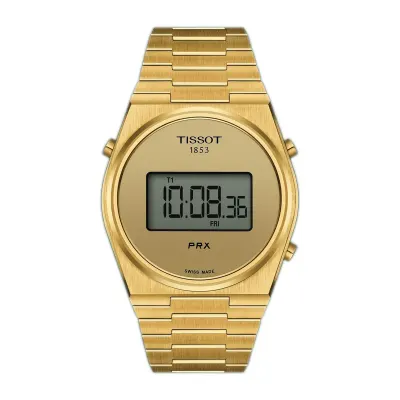
The PRX is without question the most talked-about Tissot of the past decade. Launched in 1978 and revived in 2021, it draws clear inspiration from the integrated bracelet sports watch designs that became icons of the 1970s. The integrated steel bracelet, the distinctive stepped bezel, and the slim profile have earned it a devoted following.
The quartz versions start from £279 on rubber strap or from £335 on the steel bracelet. The Powermatic 80 automatic versions start from £640. Both price points represent outstanding value for the design and finishing on offer. The PRX also comes in 25mm, 35mm, and 40mm case sizes, making it one of the more genuinely size-inclusive collections in the Tissot range.
Sport and Adventure: Seastar and T-Race
The Tissot Seastar is the brand's dive watch line, with 100m water resistance on the standard models and an extraordinary 600m rating on the Seastar 2000 Professional. The quartz chronograph versions start from £369, while the Powermatic 80 automatic models begin from £685. For serious water sports use, the Seastar represents remarkable value.
The T-Race collection handles the motorsport brief with large, 45mm chronograph cases, bold colour options, and quartz movements built for legibility rather than subtlety. Not everyone's taste. Absolutely the right choice for someone who wants a high-impact sports watch without paying sports watch prices.
Dress Watches: Le Locle and Ballade
For those who prefer a more traditional Swiss dress watch, the Le Locle and Ballade collections deliver. The Le Locle, named after Tissot's home town, offers decorated automatic movements, exhibition case backs, and classical dial designs from around £573 for the quartz ladies' models and £580 for the men's automatics. The open-heart Le Locle Powermatic 80, which shows the movement's escapement through a cut-out in the dial, is a particular highlight.
The Ballade adds a COSC-certified chronometer movement to the equation in its upper tier, making it one of the most accurate watches Tissot produces. Prices start from £320 for the quartz versions and rise to £910 for the Powermatic 80 models. For a watch that combines genuine finishing quality with certified precision, the Ballade is hard to beat at this price.
The Gentleman: Smart Casual Done Right
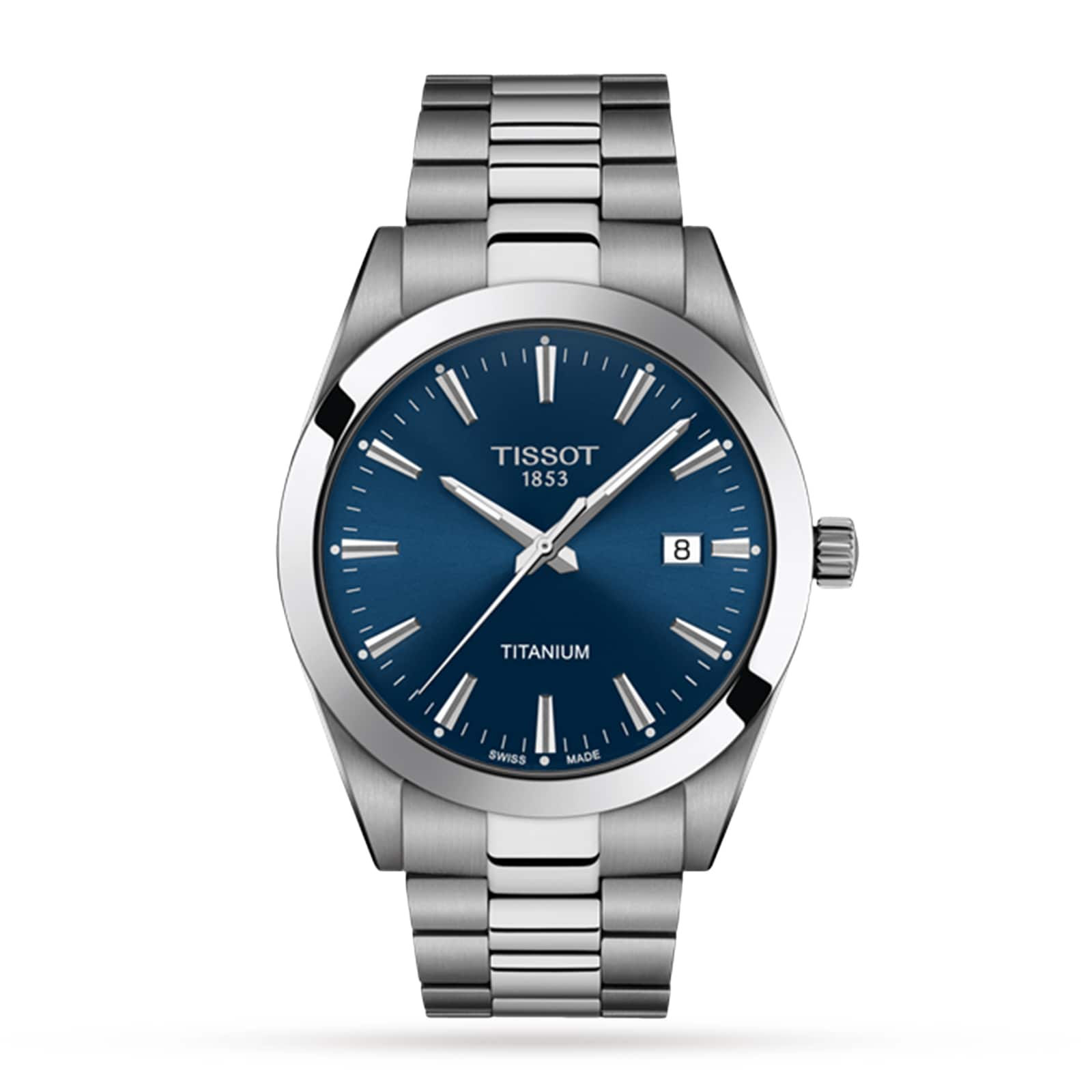
The Tissot Gentleman collection occupies a useful middle ground between dress watch and sports watch. The quartz version, available with a leather strap, starts from £299. The Powermatic 80 automatic models in the 38mm size start from £690, offering the brand's signature long-power-reserve movement in a clean, versatile 38mm case that suits a wide range of wrists. There is also a titanium quartz version for those who prefer an ultralight wear.
Best Value Picks at Every Price Point
| Budget | Watch | Movement | Price (from) |
|---|---|---|---|
| Under £250 | Everytime 40mm Mens Watch | Quartz | £195 |
| Under £300 | PRX 35mm Blue Dial Quartz | Quartz | £279 |
| Under £300 | Gentleman 40mm Blue Dial | Quartz | £299 |
| Under £400 | Seastar 1000 Quartz 40mm Blue | Quartz | £339 |
| Under £700 | PRX Powermatic 80 40mm | Automatic (80hr) | £640 |
| Under £700 | Seastar 1000 Powermatic 80 40mm | Automatic (80hr) | £685 |
| Under £800 | Gentleman Automatic 38mm Blue | Automatic (80hr) | £690 |
| Under £1,000 | Ballade 39mm Powermatic 80 Blue | Automatic (80hr) | £910 |
Why Tissot Remains Relevant in 2026
Some watch brands trade on heritage alone. Tissot earns its place in the market every year. The combination of Swiss Made certification, genuinely innovative movements, and honest pricing is not something every brand can offer. At £195 for the Everytime or £640 for the PRX Powermatic 80, Tissot delivers finishing and engineering that would cost considerably more from brands with flashier names.
The brand's willingness to span such a wide price range, from a simple quartz dress watch to a COSC-certified automatic with an 80-hour reserve, is also a genuine strength. A customer who buys an Everytime at 25 can realistically aspire to a Le Locle or a PRX automatic at 35, and stay within the same brand family throughout.
With 499 Tissot watches listed on WatchShopper, covering everything from the elegant Everytime to the technically sophisticated T-Touch Connect Sport, there is almost certainly a Tissot for every wrist and every occasion. The brand's 170-year history is not just a marketing footnote. It is a genuine record of a watchmaker that has consistently delivered on its promises.
*article prices correct at the time of writing but can vary as we update each day


